Finding a reliable Hdmi Touchscreen supplier in China requires more than comparing prices on a product page. Global buyers must examine display quality, touch accuracy, HDMI compatibility, enclosure design, and long-term support. A bright screen means little if the touch layer becomes unreliable after repeated use.
This guide introduces ten China-based suppliers serving different commercial and industrial requirements. Their product ranges may include portable monitors, embedded displays, kiosk panels, control screens, and custom touchscreen solutions. We consider manufacturing experience, technical communication, quality-control processes, customization ability, export familiarity, and after-sales responsiveness. Practical details matter, such as whether a supplier can provide sample units, wiring diagrams, test reports, and stable packaging for international shipping.
Real sourcing is rarely perfect. Some suppliers may offer strong engineering but slower communication. Others may respond quickly while providing limited customization. Buyers should verify certificates, factory capabilities, warranty terms, and production capacity before placing an order. Product specifications can also change over time.
No list is perfect.
The companies discussed here should be treated as potential partners, not automatic recommendations. Independent testing remains valuable, especially for touch sensitivity, viewing angles, heat performance, and HDMI signal stability. A careful buyer should request a complete quotation, including accessories, lead times, minimum order quantities, and shipping terms.
With clear requirements and direct technical questions, global purchasers can reduce avoidable risks. The right Hdmi Touchscreen supplier should deliver consistent products, honest communication, and dependable support after the first shipment. That standard is demanding, but it is realistic when supplier selection follows evidence rather than attractive claims.
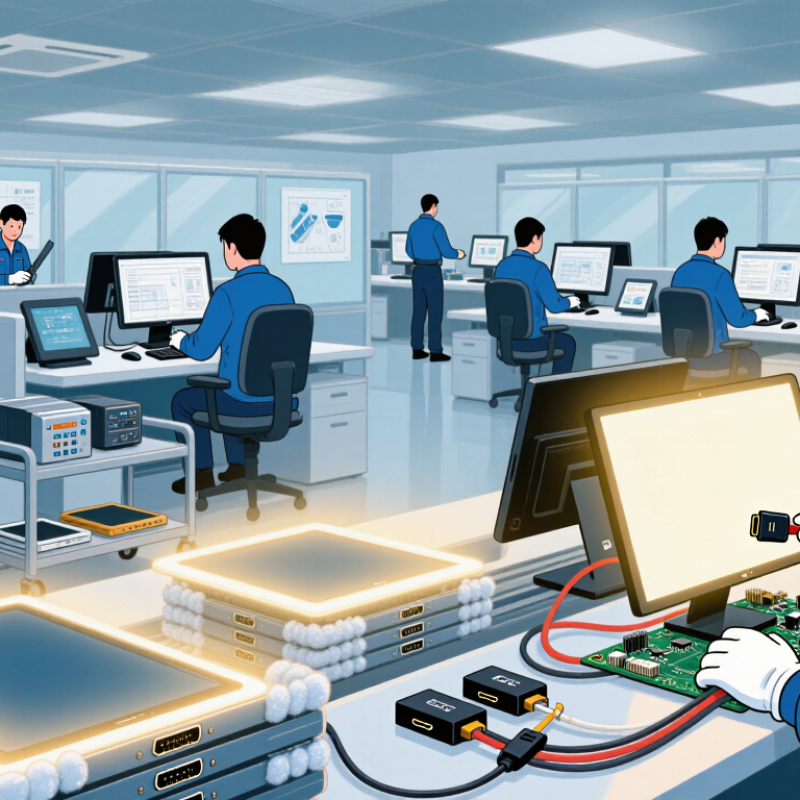
An HDMI touchscreen combines a display, a touch sensor, and a control interface. HDMI sends digital video and audio from a computer, camera, or media player to the panel. It does not carry touch commands by itself. A separate USB connection usually returns finger data to the host device.
When a finger touches the glass, projected-capacitive sensors detect changes in the electrical field. An internal controller converts those changes into coordinates, gestures, and contact points. The computer then interprets them as clicks, writing, scrolling, or multi-touch commands. In practical installation, users need both cables: HDMI for the picture and USB for interaction. Miss one, and the screen may show a perfect image but ignore every touch.
Market evidence supports this design’s growing use. Grand View Research valued the global interactive display market at about USD 11.7 billion in 2023 and forecast continued expansion through 2030. MarketsandMarkets also projected steady growth for interactive displays, driven by education, corporate collaboration, retail, and control rooms. These figures describe a broad category, not HDMI touchscreens alone. That distinction matters.
Performance depends on more than resolution. USB bandwidth, operating-system support, panel latency, surface coating, and installation angle affect daily use. A 4K panel can still feel slow. I have seen touch accuracy decline when thick gloves, glare, or poorly grounded equipment interfere. Supplier testing should include real cables, bright rooms, repeated touches, and the buyer’s target operating system. Spec sheets rarely show the whole experience.
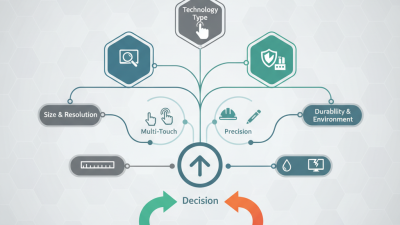
Global buyers should judge suppliers beyond price and product photos. Grand View Research valued the interactive display market at approximately USD 11.6 billion in 2023. Its forecast also indicates steady growth through 2030. This demand increases pressure on suppliers to prove consistency, not just production capacity. Ask for panel origin, touch technology, brightness data, operating temperature, and documented quality procedures. Request sample units from the same production line. One attractive prototype proves little.
Signal performance deserves close testing. HDMI 2.1 can support bandwidth up to 48 Gbps, while higher refresh rates require suitable cables, controllers, and panels. Suppliers should provide compatibility records for common operating systems and input resolutions. Test touch accuracy near the screen edges. Check response after several hours of continuous use. Small failures become expensive in retail kiosks, classrooms, and control rooms.
MarketsandMarkets identifies rising demand for interactive displays across education, healthcare, and commercial applications. Therefore, supplier support matters as much as hardware. Evaluate calibration tools, firmware update procedures, spare-part availability, and response times. Ask for ISO 9001 records, electrical safety reports, and transport testing evidence. Some suppliers may share incomplete data. That is a warning, not a minor inconvenience. A careful audit can still miss hidden weaknesses, especially when samples receive more attention than mass production.
Choosing among the top 10 HDMI touchscreen suppliers for international buyers requires more than comparing online prices. Reliable suppliers should provide clear panel specifications, HDMI version details, touch technology, brightness, viewing angles, and operating-system compatibility. Ask for a working sample before placing a larger order. A ten-minute test can reveal touch delays, uneven backlighting, or loose connectors.
Experienced buyers should also examine production consistency. Request recent quality records, sample inspection procedures, warranty terms, and replacement policies. A dependable supplier can explain how each unit is tested before shipment. Useful checks include continuous video playback, repeated touch points, screen response, and cable stability. Short videos from the factory can support, but not replace, independent inspection.
International delivery adds practical concerns. Confirm packaging thickness, pallet protection, lead time, spare parts, and after-sales response hours. Suppliers should provide documentation relevant to the destination market, including applicable electrical safety, electromagnetic compatibility, and material compliance records. Do not accept vague certificates.
Price is only one factor. A low quotation may exclude adapters, custom packaging, testing, or shipping damage coverage. A shortlist is never perfect. Even strong suppliers can miss a detail during busy production periods. I would record every promise in the purchase agreement and verify it against the sample. That small discipline often prevents expensive misunderstandings across borders.
Comparing China’s top ten HDMI touchscreen suppliers requires more than reading product catalogs. I examine screen size, resolution, brightness, touch technology, HDMI compatibility, and EDID stability. Samples should run continuously before approval. Test them with gloves, light moisture, and different cables. Small details matter. Firmware updates and clear technical documents also reveal a supplier’s engineering discipline. However, sample performance may differ from mass production, so buyers should request production-line samples.
Application fit separates a useful display from an expensive mistake. Retail kiosks need strong glass, quick touch response, and flexible mounting. Classrooms may require speakers, USB connectivity, and easy-to-clean surfaces. Industrial dashboards need wide viewing angles, stable operation, and reliable heat management. Outdoor projects should compare brightness, anti-glare treatment, sealing, and operating temperature. Ask about custom bezels, logos, cables, and packaging. I have found that unclear customization limits often create delays.
Production capacity should be compared through monthly output, assembly lines, aging tests, quality inspection, and realistic lead times. Ask whether the supplier can support both 500-unit trials and larger repeat orders. Check component traceability, inspection records, warranty handling, and response times. A large factory is not automatically dependable. Smaller production teams may offer better flexibility but struggle during demand peaks. Supplier audits help, although an audit cannot expose every weakness. Include spare parts, calibration procedures, and failure-rate data in the comparison.
| Rank | Supplier Profile | Typical Screen Sizes | Touch Technology | HDMI Input and Resolution | Operating-System Compatibility | Typical Applications | Indicative Monthly Capacity | Customization Capability | Common Certifications |
|---|---|---|---|---|---|---|---|---|---|
| 1 | Supplier Profile 01 Large-volume industrial display manufacturer |
10.1–43 inches | Projected capacitive, 10-point multitouch; optional glove operation | HDMI 1.4; up to 1920 × 1080 | Windows, Linux, Android, macOS | Industrial control, kiosks, retail, digital signage | 5,000–15,000 units | High; enclosure, glass, brightness, connectors, firmware | CE, FCC, RoHS; selected models may support UL documentation |
| 2 | Supplier Profile 02 Commercial touchscreen display specialist |
15.6–55 inches | Projected capacitive, 10-point multitouch | HDMI 1.4/2.0; Full HD to 3840 × 2160 on selected models | Windows, Linux, Android | Education, meeting rooms, interactive signage, hospitality | 3,000–10,000 units | High; custom logos excluded, bezels, mounting, I/O and software options | CE, FCC, RoHS, UKCA depending on destination |
| 3 | Supplier Profile 03 Rugged panel-PC and embedded-display supplier |
7–32 inches | Projected capacitive; resistive option for harsh environments | HDMI 1.4; up to 1920 × 1080 | Windows IoT, Linux, Android | Factory automation, transportation, outdoor terminals, control cabinets | 1,500–5,000 units | Very high; IP-rated front panels, fanless computers, wide-temperature options | CE, FCC, RoHS; IP ratings require model-specific verification |
| 4 | Supplier Profile 04 OEM/ODM kiosk touchscreen producer |
10.1–32 inches | Projected capacitive, 10-point multitouch | HDMI 1.4; up to 1920 × 1080 | Windows, Linux, Android | Self-service kiosks, ticketing, payment terminals, visitor management | 2,000–8,000 units | Very high; complete kiosk integration and mechanical design support | CE, FCC, RoHS; payment-related compliance is application-specific |
| 5 | Supplier Profile 05 High-brightness outdoor display supplier |
10.1–32 inches | Projected capacitive; anti-glare and optical-bonding options | HDMI 1.4; Full HD, with selected 4K models | Windows, Linux, Android | Outdoor information points, marine equipment, transportation, signage | 800–3,000 units | High; brightness, thermal management, waterproofing and mounting | CE, FCC, RoHS; IP and sunlight-readable ratings require testing |
| 6 | Supplier Profile 06 Medical and laboratory display supplier |
15.6–27 inches | Projected capacitive; antimicrobial glass options | HDMI 1.4; up to 1920 × 1080 | Windows, Linux, Android | Medical carts, laboratory instruments, patient check-in, diagnostics | 500–2,000 units | Medium to high; cleanability, mounting and cable-management options | CE, FCC, RoHS; medical approvals must be confirmed per final system |
| 7 | Supplier Profile 07 Interactive education display manufacturer |
21.5–86 inches | Infrared multitouch or projected capacitive depending on size | HDMI 2.0 on larger models; Full HD to 3840 × 2160 | Windows, Linux, Android, ChromeOS-compatible host systems | Classrooms, training centers, corporate collaboration, presentations | 300–1,500 units | Medium; touch overlay, speakers, camera, stand and software integration | CE, FCC, RoHS, UKCA depending on market |
| 8 | Supplier Profile 08 Retail and POS touchscreen supplier |
10.1–24 inches | Projected capacitive, 10-point multitouch | HDMI 1.4; typically 1280 × 800 or 1920 × 1080 | Windows, Linux, Android | Point of sale, restaurants, retail counters, inventory terminals | 2,000–7,000 units | High; stands, peripheral ports, cable routing and integrated computers | CE, FCC, RoHS; payment certification depends on the complete POS system |
| 9 | Supplier Profile 09 Portable and field-monitor manufacturer |
13.3–17.3 inches | Projected capacitive, 10-point multitouch | HDMI 1.4; up to 1920 × 1080 | Windows, Linux, macOS, Android, selected game consoles | Mobile workstations, photography, field service, remote presentations | 1,000–4,000 units | Medium; battery, cover, kickstand, enclosure color and connector options | CE, FCC, RoHS; battery transport documentation may be required |
| 10 | Supplier Profile 10 Small-batch custom display integrator |
7–27 inches | Projected capacitive or 4/5-wire resistive | HDMI 1.4; commonly 1280 × 800 to 1920 × 1080 | Windows, Linux, Android, macOS | Prototype systems, laboratory equipment, automation panels, specialty retail | 200–1,000 units | Very high for small batches; custom dimensions, interfaces and mounting | CE, FCC and RoHS where applicable; buyer verification recommended |
China’s top ten HDMI touchscreen suppliers should be treated as a starting shortlist, not a final decision. Grand View Research estimates the global touchscreen market could grow at about 8.9% annually through 2030. Demand is rising, but supplier quality remains uneven. Request a working sample before discussing large orders. Test touch accuracy, response time, viewing angles, brightness, and HDMI stability. Check whether the panel supports the required HDMI version, resolution, EDID behavior, and HDCP settings.
Tips: Ask for a factory video, quality-control records, and recent third-party test reports. Verify ISO 9001 procedures, CE, FCC, UKCA, or other destination-market requirements. A certificate image is not enough. Confirm the certificate holder, model number, testing laboratory, and expiry date. Compare the supplier’s legal entity with its bank account and export documents. This small check can prevent an expensive mistake.
Purchase terms need equal attention. Define pixel defects, dead-touch zones, glass hardness, packaging tests, warranty length, spare-part availability, and response times in the contract. The HDMI Forum specifies up to 48 Gbps for HDMI 2.1, but not every touchscreen needs that bandwidth. Paying for unused performance can reduce value. I would also inspect two production batches, not only one sample. A good sample can still hide inconsistent assembly. Suppliers should accept clear inspection standards, traceable serial numbers, and staged payments linked to verified quality.