Top Types of TFT Touch Screen Displays for Your Next Project
When embarking on a new project, selecting the right display technology is crucial. Tft touch screens have become a popular choice due to their versatility and performance. These displays offer vibrant colors and high responsiveness, enhancing user interaction significantly. Whether for industrial applications or consumer electronics, tft touch screens meet various needs.
The diversity in tft touch screen types can be overwhelming. Capacitive and resistive screens are among the most common. Each has its own advantages and limitations. Capacitive screens excel in clarity and responsiveness but may be less durable in harsh conditions. Conversely, resistive screens can handle adversity but lack the same level of touch sensitivity.
Understanding the specific requirements of your project is essential. You may find that the ideal tft touch screen is not the most recognized one. Exploring lesser-known options could lead to better results. Balancing technology with project goals often demands careful thought and consideration. The right choice today can greatly influence the success of your project tomorrow.

Understanding TFT Touch Screen Displays and Their Applications
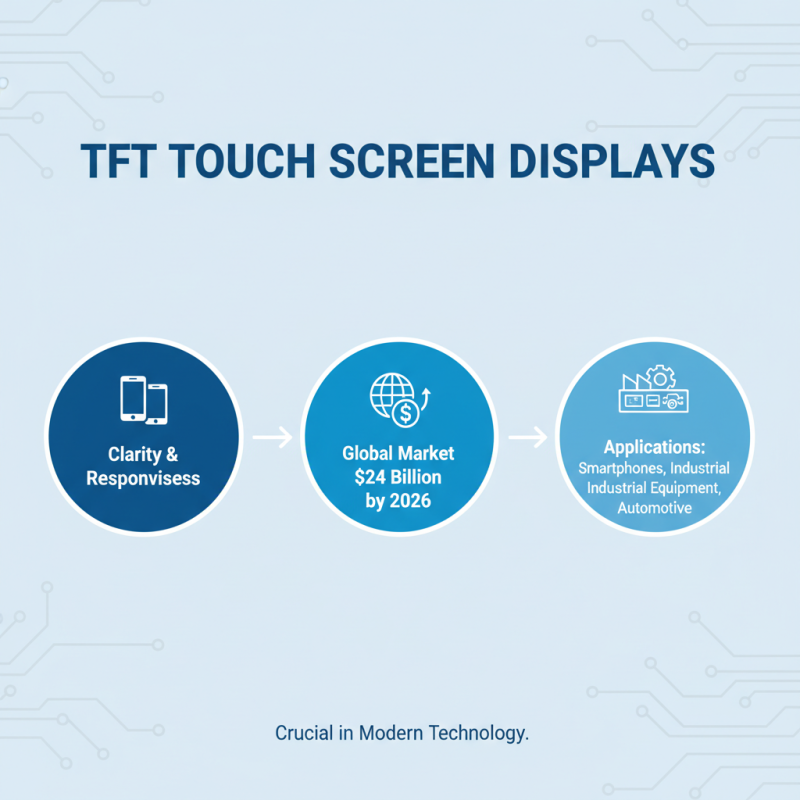
TFT touch screen displays are crucial in numerous applications today. These displays are known for their clarity and responsiveness. In a recent industry report, it was noted that the global market for TFT displays is projected to reach $24 billion by 2026. This growth underscores their importance in devices ranging from smartphones to industrial equipment.
The versatility of TFT displays is one of their strongest attributes. They can be found in automotive dashboards, medical devices, and even home appliances. For instance, a study highlighted that about 30% of smartphones utilize TFT technology for their screens. However, the challenge remains in balancing cost and performance. Manufacturers often struggle with achieving high resolution while keeping production costs low.
While TFT technology offers many benefits, there are limitations to consider. For example, viewing angles can sometimes be a concern, particularly in older models. Additionally, power consumption may vary based on usage, impacting battery life in portable devices. Developers must weigh these factors against the desired application. Making informed decisions requires understanding both the strengths and weaknesses of TFT technology.
Key Features to Consider When Choosing a TFT Touch Screen Display
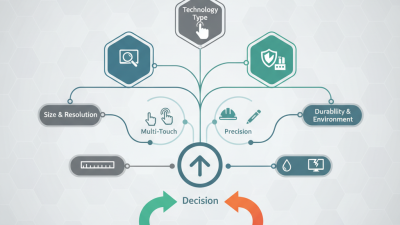
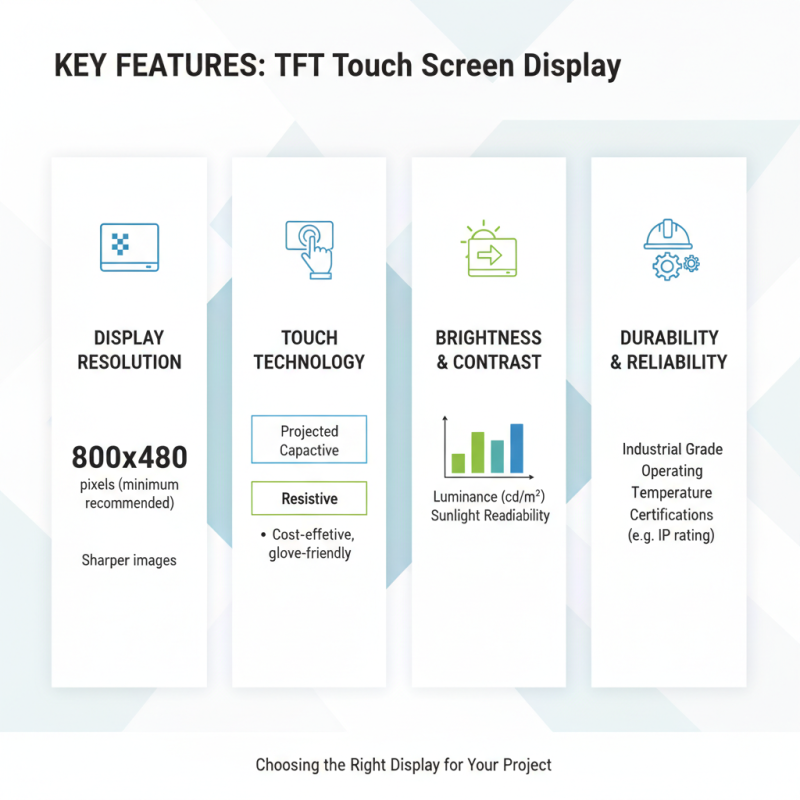
When selecting a TFT touch screen display for your project, there are several key features to consider. One of them is the display resolution. Higher resolutions allow for sharper and clearer images. According to industry reports, a resolution of at least 800x480 pixels offers a good balance between cost and display quality. However, some applications may require even higher resolutions, especially in specialized fields like medical imaging or industrial automation.
Touch sensitivity is another crucial factor. Capacitive touch screens generally offer better sensitivity and multi-touch capabilities compared to resistive options. Statistics show that over 75% of developers prefer capacitive touch due to its responsiveness. Nevertheless, resistive touch screens might be more suitable in environments where moisture or gloves are an issue.
Power consumption can also significantly impact the overall design of your project. Energy-efficient displays are vital for battery-operated devices. Reports indicate that TFT panels can consume up to 30% less power than older LCD technologies. Yet, balancing screen brightness and energy efficiency remains a challenge that designers must address. Assessing these features in detail can help ensure you choose the right TFT display for your specific needs.
Different Types of TFT Touch Screen Technologies Explored
TFT touch screen technologies come in various types, each with unique features and advantages. One popular option is the In-Plane Switching (IPS) panel. IPS displays offer better color reproduction and wider viewing angles compared to other technologies. They are ideal for projects that require high-quality visuals. However, their cost can be higher than other types, which might not suit all budgets.
Another type to consider is the Twisted Nematic (TN) panel. TN displays are known for their fast response times and low cost. They work well in gaming applications where speed is crucial. Yet, TN panels often suffer from poorer color accuracy and viewing angles. This can affect user experience in applications reliant on vibrant visuals.
Also worth mentioning is the Vertical Alignment (VA) panel. It provides excellent contrast ratios and deep blacks, enhancing image quality in dim environments. However, the color accuracy can vary. This inconsistency might pose challenges for projects requiring precise color calibration. Ultimately, selecting the right TFT technology depends on project demands and budget considerations. Each type has its strengths and weaknesses, making it essential to analyze your needs carefully.
Comparative Analysis of TFT Touch Screen Displays for Various Projects
When it comes to selecting TFT touch screen displays, some crucial factors must be considered. A comparative analysis reveals the varied applications of these displays across different projects. For instance, data from the Display Industry Association indicates that TFT displays account for over 50% of the touch screen market. Their versatility makes them ideal for consumer electronics and industrial automation.
One essential aspect to consider is the resolution and clarity. Higher resolutions provide crisper images and better user experiences. However, this also means increased costs, which may not always align with budgetary constraints. Balancing performance and cost is an area many developers struggle with.
Tip: Always prototype with multiple display types. This can reveal unexpected performance differences, allowing for informed decisions. Additionally, compatibility with existing hardware is critical. Some displays may not integrate well with older systems, leading to project delays. Analyzing specifications and conducting thorough testing can mitigate these risks.
Project managers should also prioritize durability and responsiveness. According to industry reports, displays used in outdoor settings need to withstand harsh conditions. The environment can significantly impact their performance. Understanding these factors ensures a reliable and effective user interface.
Best Practices for Integrating TFT Touch Screens into Your Designs
Integrating TFT touch screens into designs requires careful planning. A recent industry report states that over 50% of developers prioritize user experience in their projects. This highlights the importance of selecting the right display type based on your design's needs.
Consider resolution and size when choosing a TFT display. Higher resolutions offer better clarity, but can increase costs. According to the Display Industry Association, a 720p display may suffice for simple applications, while advanced projects may require 1080p or higher. This balance between cost and quality is crucial for budget management.
Testing and iteration are key in the integration process. Many designers overlook the necessity to prototype and gather user feedback. Reports indicate that 70% of usability issues stem from insufficient testing. Failing to iterate can lead to products that miss the mark in performance and user satisfaction. Prioritize pilot testing to address potential shortcomings early in the development life cycle.
Top Types of TFT Touch Screen Displays Used in Projects