Leave Your Message

China Top Capacitive Touch Screen Manufacturers?

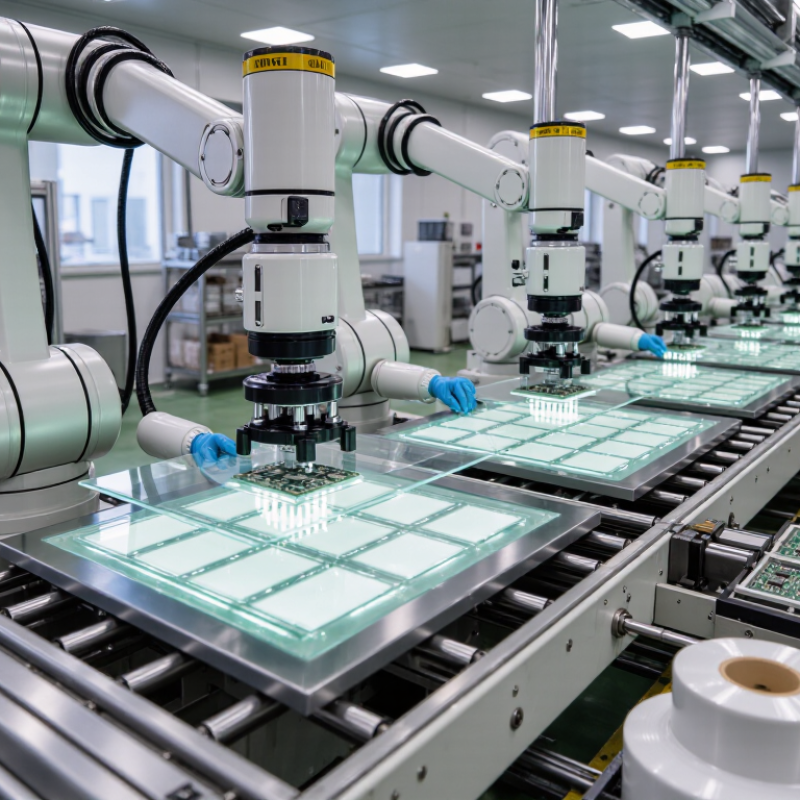
China has become a major production base for Capacitive Touch Screen technology. Its supply chain covers ITO glass, sensor films, controller chips, cover glass, lamination, and optical bonding. This depth can shorten development cycles and reduce sourcing complexity. It can also create quality differences between suppliers.

Grand View Research reported that the global touchscreen market was valued at approximately USD 79 billion in 2023. The firm expects continued growth through 2030, driven by smartphones, vehicles, medical devices, industrial panels, and smart appliances. Capacitive Touch Screen demand remains strong because users expect fast response, multi-touch control, slim structures, and clear images. MarketsandMarkets also identifies automotive and consumer electronics as important growth applications. However, market reports often combine several touchscreen technologies. Their figures should not be treated as precise data for every capacitive supplier.

Steve Jobs, Apple’s co-founder, described the user interface simply: “We’re going to use the best pointing device in the world. We’re going to use our fingers.” That principle still shapes modern touch design. In practice, buyers must examine more than factory size. They should verify touch sensitivity through gloves, moisture, electromagnetic interference, temperature changes, and repeated tapping. A bright showroom sample proves little.

This guide reviews China’s top Capacitive Touch Screen manufacturers through engineering capability, customization experience, production scale, quality systems, delivery performance, and export reliability. Some rankings remain subjective. Supplier claims also require independent verification. That is the uncomfortable part. A low quotation may hide weaker bonding, unstable controllers, or limited after-sales support. Conversational marketing cannot replace test results, audited certifications, and samples evaluated in real working conditions.
China Top Capacitive Touch Screen Manufacturers?

What Are Capacitive Touch Screens and How Do They Work?

Capacitive touch screens detect changes in an electrical field, rather than physical pressure. A transparent electrode grid sits beneath the glass surface. When a finger approaches, its conductivity alters the local capacitance. The touch controller measures this change across multiple points and calculates the contact position. Mutual-capacitance systems are common because they support accurate multi-touch gestures, including pinching and swiping. The surface may feel simple, but the signal processing is not.

Market data shows why this technology remains important. Fortune Business Insights valued the global touchscreen market at about USD 81.86 billion in 2023 and projected continued growth through 2032. A separate MarketsandMarkets analysis identifies smartphones, automotive displays, and industrial equipment as major demand areas. These figures include several touch technologies, so they should not be treated as capacitive-only totals. That distinction matters. In practical testing, dry bare fingers usually produce clean signals, while thick gloves, moisture, electromagnetic noise, or damaged cover glass can reduce accuracy. Controllers therefore use filtering and recalibration to separate intentional touches from interference. Engineers also test response time, edge sensitivity, optical clarity, and operation across temperature changes. The basic explanation is incomplete without these conditions. A screen can respond quickly in a laboratory, yet behave differently beside machinery or under bright outdoor light. Better designs balance electrode spacing, glass thickness, power use, and software compensation. No single specification guarantees a dependable touch experience.

Why Choose Chinese Capacitive Touch Screen Manufacturers?

Chinese capacitive touch screen manufacturers are often chosen for their engineering depth, production scale, and flexible customization. Many factories handle cover glass, sensor bonding, controller tuning, and final assembly within one system. This reduces handoff delays. It can also simplify quality tracing.

During supplier evaluations, buyers should inspect more than a polished sample. Ask for test records covering touch accuracy, glove operation, humidity, surface hardness, and repeated tapping. A reliable manufacturer should explain its inspection points clearly. It should provide measurable tolerances, process documents, and traceable batch information. Chinese manufacturing clusters also connect glass processors, electronic component suppliers, tooling teams, and packaging services. This network can shorten development cycles for industrial panels, vehicle displays, medical equipment, and self-service terminals. That matters.

Cost remains important, but low pricing alone can create risk. Some suppliers quote aggressively, then adjust materials or testing later. The process is not effortless. Buyers need clear drawings, environmental requirements, sample approval rules, and communication records. Factory audits, pilot orders, and independent testing can reveal weak controls before volume production begins. Small defects still happen, even in mature facilities. A bezel gap may appear after assembly. Touch response may weaken near the screen edge. Honest technical discussion matters. It often separates a dependable long-term partner from a convenient short-term quote.

Key Types of Capacitive Touch Screen Manufacturers in China

China’s capacitive touch screen manufacturers generally fall into four practical categories. Sensor specialists produce ITO glass, metal-mesh films, or flexible sensor layers. Panel integrators combine sensors, cover glass, displays, and controllers. Custom OEM/ODM factories build complete touch modules for industrial equipment, medical devices, vehicles, and retail terminals. Precision cover-glass processors focus on chemical strengthening, printing, drilling, and optical bonding.

According to MarketsandMarkets, the global touchscreen market is projected to grow from about USD 67 billion in 2023 to more than USD 90 billion by 2028. This expansion increases demand for thinner modules, glove operation, water resistance, and stronger optical performance. In practice, Chinese suppliers differ sharply in testing depth. Some maintain environmental chambers and automated inspection lines. Others still depend heavily on manual checks. That difference matters. A low quotation can become expensive after repeated calibration, poor bonding, or unstable touch response.

Tips: Match the manufacturer type to your product risk. Ask for test records covering humidity, temperature cycling, surface hardness, and repeated touch durability. For automotive or medical applications, verify quality-system certificates and traceability before sampling. Request a pilot batch, not only a polished sample. The first sample may hide production variation. Also check controller tuning support, since a good sensor can perform poorly with unsuitable firmware. Industry surveys from Omdia repeatedly highlight display integration and supply-chain reliability as major purchasing factors. Buyers should therefore assess engineering communication, replacement policy, and capacity evidence, not only factory photos.

China Capacitive Touchscreen Manufacturers: Key Technology Types

The chart compares common capacitive touchscreen technology categories by their typical simultaneous touch-point capability. Surface-capacitive and self-capacitance designs generally support single-touch input, while mutual-capacitance and multi-touch projected-capacitive designs commonly support up to ten touch points. Actual specifications vary by controller, sensor layout, and application.

How to Evaluate China’s Leading Touch Screen Suppliers

China’s top capacitive touch screen manufacturers should be judged by evidence, not catalog claims. Fortune Business Insights valued the global touchscreen market at about USD 76 billion in 2023. Its forecast also indicates strong growth through 2030. That growth attracts capable factories and inexperienced traders. Buyers should verify whether a supplier controls glass cutting, sensor production, bonding, and final testing. A factory visit can reveal more than a polished website.

Request measured data for touch accuracy, surface hardness, haze, transmittance, and operating temperature. Ask for the controller model, ITO resistance range, cover-glass thickness, and optical bonding method. For industrial projects, test samples at low temperatures, high humidity, and repeated finger touches. ISO 9001 certification helps, but it is not proof of consistent quality. Review recent audit records, inspection reports, and failure-rate data. TÜV Rheinland and SGS testing can add independent evidence, although laboratory scope matters.

Tips: Compare three samples under identical conditions. Check response near the edges. Inspect black borders under bright light. Ask for a traceable corrective-action report when a sample fails. A low quotation may hide weaker glass or unstable supply. I would not treat fast replies as technical competence. Some suppliers still provide incomplete drawings. That is a warning, not a minor inconvenience. Ensure the supplier can maintain dimensional tolerance, packaging protection, and replacement support across the full production cycle.

What Industries Use Capacitive Touch Screens from China?

Capacitive touch screens made in China serve far more than phones and tablets. Factory automation uses them for machine settings, production counts, and alarm panels. Their smooth glass surfaces resist dust and support frequent cleaning. The 2024 MarketsandMarkets HMI report forecasts steady growth in industrial human-machine interfaces through 2029. In practice, buyers still need to check glove operation, wet-finger accuracy, EMI resistance, and sunlight readability.

Transportation is another major user. Electric buses, rail systems, fleet terminals, and vehicle dashboards require compact displays with strong vibration resistance. IDC recorded approximately 1.24 billion smartphone shipments worldwide in 2024, showing the scale of China’s consumer-electronics supply chain. That scale also supports tablets, smart appliances, payment terminals, and retail kiosks. Large volumes can reduce unit cost, but they do not guarantee stable quality.

Healthcare, hospitality, education, and public services use these screens for bedside terminals, self-check-in stations, classroom devices, and queue systems. Fortune Business Insights estimated the global touchscreen market at more than USD 75 billion in 2023, with continued expansion expected through 2032. A recurring field-test lesson is simple: the glass is rarely the weakest part. Adhesive aging, connector failure, and software calibration often create trouble. This assumption deserves regular review. Procurement teams should request temperature tests, lifecycle data, IP ratings, and sample validation before approving production.

China Top Capacitive Touch Screen Manufacturers? - What Industries Use Capacitive Touch Screens from China?

Industry Typical Products Preferred Capacitive Technology Key Functional Requirements Common Cover-Lens Materials Environmental Considerations Relevant Manufacturing Capabilities in China
Consumer Electronics Smartphones, tablets, handheld terminals, portable media devices Projected capacitive multi-touch High touch sensitivity, gesture recognition, slim structure, optical clarity chemically strengthened glass, soda-lime glass, printed glass Daily handling, fingerprints, scratches, moisture and repeated touch cycles Fine-pitch sensor patterning, optical bonding, CNC or laser glass processing, custom decoration
Automotive Infotainment displays, instrument panels, climate-control interfaces, rear-seat systems Projected capacitive touch with automotive-grade controller integration Glove operation, accurate touch detection, sunlight readability, low reflection Automotive glass, chemically strengthened glass, anti-glare or anti-reflective glass Wide temperature variation, vibration, electromagnetic interference, ultraviolet exposure Large-format lamination, cover-lens printing, EMI-aware design, customized connector and FPC assembly
Industrial Automation Human-machine interfaces, control panels, programmable terminal displays, monitoring equipment Projected capacitive touch or hybrid touch interfaces Reliable operation, support for gloves, long service life, integration with thick protective layers Tempered glass, chemically strengthened glass, glass-polyester overlays Dust, oil, water spray, vibration, electrical noise and industrial cleaning agents Custom panel dimensions, waterproof sealing, glove-tuning, functional testing and enclosure integration
Medical Equipment Patient monitors, diagnostic equipment, laboratory instruments, medical carts Projected capacitive touch with sealed front-surface construction Accurate input, easy cleaning, low-reflection display, compatibility with disposable gloves Chemically strengthened glass, anti-glare glass, glass with antimicrobial surface treatments Disinfectants, fluids, repeated cleaning, hygiene requirements and continuous operation Sealed optical bonding, cleanroom assembly, chemical-resistance testing and traceable quality inspection
Retail and POS Point-of-sale terminals, self-checkout kiosks, payment devices, customer displays Projected capacitive multi-touch Fast response, intuitive navigation, durable surface and clear graphics Tempered glass, chemically strengthened glass, printed cover glass Frequent public use, fingerprints, spills, impact and routine cleaning Custom bezels, anti-fingerprint coatings, optical bonding, rapid sample customization and volume assembly
Hospitality and Public Information Hotel check-in kiosks, ticketing machines, wayfinding kiosks, vending interfaces Projected capacitive touch, including large-format configurations Simple user interaction, high visibility, vandal resistance and continuous availability Tempered glass, laminated glass, anti-glare glass Public contact, temperature changes, dust, moisture and possible impact Large-size glass processing, reinforced construction, waterproof design and kiosk-level integration
Education and Collaboration Interactive displays, digital whiteboards, classroom control panels, meeting-room systems Projected capacitive multi-touch Multi-user interaction, low parallax, smooth writing and clear image transmission Tempered glass, anti-glare glass, low-reflection cover glass Frequent touch, classroom dust, accidental impact and extended operating periods Large-format lamination, multi-touch calibration, low-reflection treatment and custom mechanical integration
Smart Home and Building Controls Thermostats, lighting panels, security panels, appliance interfaces Projected capacitive touch or surface capacitive touch Low-power operation, compact design, responsive single-touch control and decorative flexibility Decorated glass, acrylic, polycarbonate or glass-polymer overlays Indoor humidity, household cleaning products, temperature changes and long standby periods Thin sensor construction, custom icons and borders, low-power controller matching and small-batch flexibility
Selection note: Projected capacitive touch is widely used because it supports multi-touch and a glass front surface. Final performance depends on sensor design, controller tuning, cover-lens thickness, gloves, moisture, electromagnetic conditions and the complete display assembly.