Leave Your Message
Choosing a reliable display partner can shape the success of an entire product line. For global buyers, China remains a major sourcing destination for TFT Touch Screen solutions, from compact handheld panels to large industrial interfaces. However, a polished catalog does not always prove manufacturing strength. Real evaluation requires evidence.
This guide introduces leading China TFT touch screen manufacturers and explains how buyers can compare them with greater confidence. It considers display size, resolution, brightness, viewing angle, touch technology, and operating temperature. It also examines production capability, quality systems, customization support, communication, and export experience. A sample may look excellent under showroom lighting. It may perform differently inside a vehicle, medical device, or outdoor control panel.
Details matter.
Experienced buyers should request datasheets, test reports, sample units, and clear tolerance information. They should also ask how suppliers manage bonding, dust control, dead pixels, touch sensitivity, and long-term component availability. Factory visits or independent inspections can reveal practical conditions, including calibration equipment and final testing procedures. Certifications deserve attention, but certification alone cannot replace technical verification.
No supplier is perfect. Even a respected manufacturer may struggle with a rushed customization project or an unusual operating environment. Buyers should document requirements early and challenge vague promises. This article offers a practical starting point, not a substitute for engineering validation. By comparing verifiable capabilities and testing products against real working conditions, global buyers can reduce avoidable risk and build stronger, more dependable sourcing relationships.
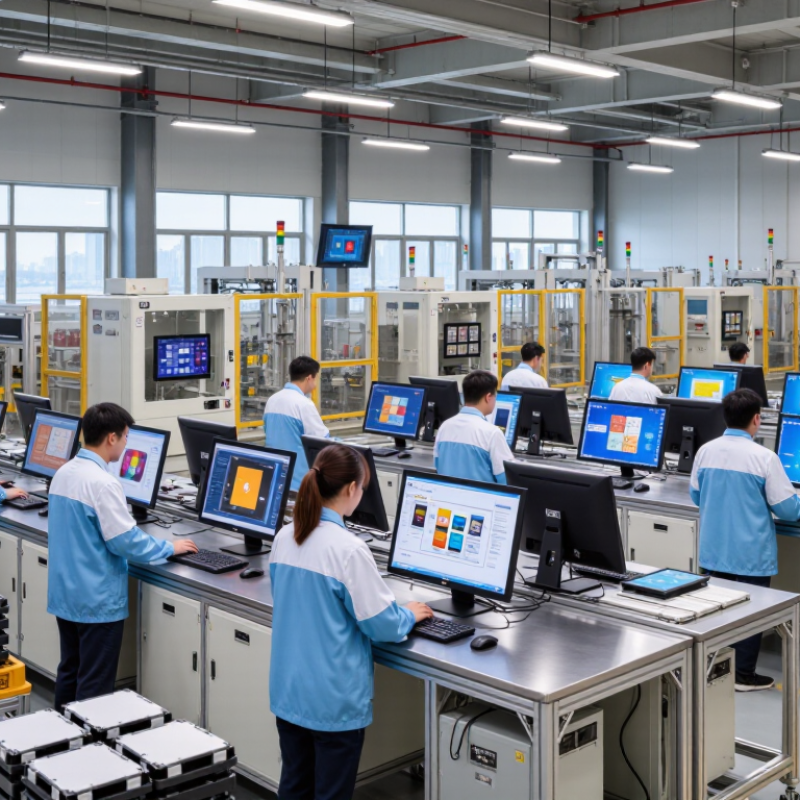
A TFT touch screen combines a thin-film transistor display with a touch-sensing layer. It shows images through controlled pixels and receives input from a finger, stylus, or glove. Modern modules may include cover glass, optical bonding, backlights, and controller boards. They appear in medical devices, factory terminals, vehicle systems, and retail equipment.
The global touch screen market was valued at about USD 81.9 billion in 2023, according to Grand View Research. Its report projects continued growth through 2030. Demand is not only about larger panels. Buyers also need readable sunlight performance, stable touch response, and long production support. China attracts them through a dense supply network for glass, driver ICs, flexible circuits, and mechanical parts. Shorter coordination paths can reduce redesign time.
That advantage needs careful checking. A lower quotation may hide weak bonding, uneven backlight diffusion, or limited firmware testing. I have seen specifications look complete while outdoor readability remained disappointing. The gap matters. Professional buyers should request sample testing under heat, moisture, gloves, and repeated touches. Omdia’s display industry research also shows intense pressure on panel pricing and capacity, which makes supplier stability important. China can offer practical customization, but quality control must remain independent. Prototype approval should include measured brightness, contrast, touch latency, viewing angle, and operating temperature, not only attractive product photos.
| Evaluation Dimension | Typical TFT Touch Screen Data | Relevance for Global Buyers |
|---|---|---|
| Product Definition | TFT LCD with an integrated touch sensor, cover lens, and display-control electronics | Combines image presentation and user input in one assembly, helping simplify product integration and front-panel design. |
| Common Display Sizes | Approximately 2.4 to 15.6 inches for many embedded and industrial applications | Supports compact handheld devices, control panels, medical instruments, point-of-sale equipment, and vehicle interfaces. |
| Typical Resolutions | 320 × 240, 480 × 272, 800 × 480, 1024 × 600, 1280 × 800, and Full HD options | Buyers can match pixel density and system-processing requirements to the intended viewing distance and user interface. |
| Touch Technologies | Projected capacitive Resistive Infrared | Projected capacitive touch is widely used for multi-touch and consumer-style interaction; resistive touch is suitable for gloved operation and stylus input. |
| Touch Performance | Single-touch or multi-touch operation; typical projected-capacitive designs support operation through light gloves depending on sensor tuning | Touch performance should be verified with the final cover glass, gloves, moisture conditions, and intended operating system. |
| Display Interfaces | RGB MCU SPI MIPI DSI LVDS eDP | Interface selection affects processor compatibility, cable design, bandwidth, electromagnetic performance, and software development effort. |
| Touch Interfaces | Common options include I²C and USB; controller selection depends on the touch sensor and host platform | Early interface confirmation reduces firmware changes and helps ensure compatibility with the buyer's main control board. |
| Brightness Range | Approximately 250 to 1,500 cd/m², with higher-brightness versions available for outdoor or high-ambient-light use | Brightness requirements should be evaluated together with cover-glass reflectance, optical bonding, viewing angle, and power consumption. |
| Viewing Angle | IPS-type TFT panels commonly provide wide viewing angles, often around 80° or more per direction | Wide viewing angles improve readability when operators view equipment from different positions. |
| Operating Temperature | Typical commercial modules: about 0°C to 70°C; industrial versions may support approximately -20°C to 70°C or wider ranges | The complete module, including touch adhesive, controller, cable, and cover lens, must be qualified at the required temperature range. |
| Cover Glass Options | Chemically strengthened glass, anti-glare treatment, anti-fingerprint coating, printed borders, and custom thicknesses | Cover-glass selection affects durability, optical clarity, touch sensitivity, cleaning performance, and enclosure fit. |
| Optical Bonding | Air-gap or optical-bonded construction using adhesive between selected optical layers | Optical bonding can reduce internal reflections and improve outdoor readability, while air-gap designs may offer simpler servicing and lower initial complexity. |
| Mechanical Customization | Custom bezels, mounting holes, flex-cable positions, connector locations, thicknesses, and active-area dimensions | Customization helps the display fit existing housings and can reduce mechanical redesign during product development. |
| Production Support | Prototype sampling, engineering validation, pilot production, mass production, and end-of-life notification processes | A structured development process helps buyers manage design changes, quality approvals, production ramp-up, and long-term availability. |
| Quality Documentation | Common documents include drawings, specifications, inspection reports, reliability data, and change-control records | Complete documentation supports incoming inspection, product qualification, regulatory files, and supplier-quality management. |
| International Compliance Considerations | Depending on the finished product: RoHS, REACH, EMC, electrical safety, and regional market requirements | Compliance responsibility depends on the complete equipment and destination market; buyers should request material and test documentation before shipment. |
| Why Global Buyers Consider China | Established electronics supply chains, broad component availability, engineering customization capability, and large-scale manufacturing capacity | These factors can support flexible specifications, coordinated sourcing, prototype development, and scalable production when supplier capability is properly verified. |
| Key Supplier-Selection Checks | Technical response quality, sample consistency, optical performance, touch reliability, production controls, traceability, and communication | Comparing suppliers on measurable criteria is more reliable than evaluating price alone and helps reduce integration and field-failure risks. |
Note: Values shown are typical industry ranges or commonly available configurations. Final specifications depend on the selected panel, touch sensor, controller, cover glass, bonding method, and application requirements.