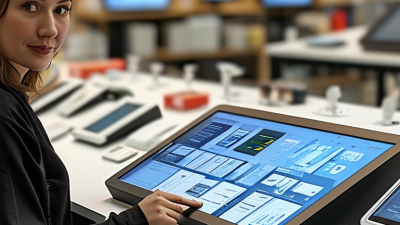
Choosing a Pc Touch Panel is no longer a simple matter of comparing screen size and price. A panel may look sharp in a showroom, yet fail beside a sunny window or respond poorly to gloved hands. MarketsandMarkets reports that the global touch screen market could grow from about USD 58.6 billion in 2023 to USD 81.9 billion by 2028. This growth reflects wider use in industrial controls, retail terminals, medical devices, and smart equipment. It also creates more confusing choices.
Small details matter.
A practical selection should examine touch technology, viewing angle, brightness, surface hardness, response time, operating temperature, and expected service life. IEC 60529 ingress-protection ratings help describe resistance to dust and water, but an IP rating does not guarantee reliable touch performance. Omdia’s display research continues to highlight demand for durable, interactive displays across professional applications. However, market reports use different definitions and forecast periods. Their numbers should guide decisions, not replace testing.
In real installations, fingerprints, condensation, metal tools, and reflective lighting can expose weaknesses quickly. A projected-capacitive panel may deliver smooth multi-touch control, while resistive technology can remain useful with gloves or styluses. Neither option is automatically better. The correct choice depends on the environment, users, mounting method, and maintenance plan. This guide presents ten practical tips for choosing a Pc Touch Panel with greater confidence. Some recommendations may seem obvious. They are still easy to overlook. A short hands-on trial, realistic workload, and documented supplier support can prevent expensive replacements later.
Choosing a PC touch panel starts with the workflow, not the screen diagonal. A warehouse operator may need a 10-inch panel for barcode fields, alerts, and gloved taps. A dashboard analyst may work better on 15.6 inches, especially with side-by-side charts. Measure the physical reach. Also note viewing distance, lighting, and mounting height. I have seen compact panels fail when users must scroll through every form. That small saving became slower work.
Aspect ratio changes how information sits. A wide panel suits timelines, equipment status, and two-column forms. A squarer display can reduce wasted space in portrait documents or control lists. Sketch the busiest screen before purchasing. Put buttons where a hand naturally rests. Ten-point touch is useful when two hands, gestures, or several users interact with the display. Yet more touch points do not fix poor interface spacing. Keep targets large enough for hurried fingers and protective gloves. Test with real users. Not just designers.
Check touch accuracy near edges, palm rejection, and response through the intended cover glass. Run trials with wet fingers if the workplace creates that condition, but do not assume every panel performs equally. Record missed taps, glare, and cleaning interruptions. I would leave room for revision here. Workflows change, and the first screen map is rarely perfect. Choose the size and ratio that reduce repeated movement, then verify the decision during a normal shift.
Indoor PC touch panels often operate under 500–1,000 lux. That range seems predictable, but lighting changes across a room. A desk near a window may look bright at noon. The same desk can appear dull on a cloudy afternoon. In practical testing, compare the display with forms, charts, and small icons. Dim text slows decisions.
Brightness should support clear viewing without creating glare. For many indoor workspaces, a moderate-to-high brightness level is more useful than maximum output. Contrast also matters. Deep blacks and clean whites help operators distinguish status labels, warnings, and fine controls. However, strong contrast cannot repair poor viewing angles or reflections from overhead lights. An anti-glare surface can improve comfort, but it may slightly soften image sharpness.
I once judged a panel under showroom lighting and found it unsuitable at the installation site. That mistake was avoidable. Test the screen at its actual mounting height and viewing angle. Measure brightness near the user’s position, not beside the window. Check the display with lights on and off. Auto-brightness can help, although it may react too slowly in changing conditions. Leave room for adjustment. A carefully matched panel reduces eye strain and supports more reliable touch interaction during long shifts.
When choosing a PC touch panel, verify what IP65 actually covers. Under IEC 60529, IP65 means the protected front is dust-tight and resists water jets. It does not allow immersion. It also does not guarantee protection for rear connectors or cable openings.
Ask for the exact test scope, not only an IP rating printed on a datasheet. Confirm whether the complete front assembly was tested, including the glass, bezel, buttons, and mounting seal. Review test conditions and reports from a qualified laboratory. Small installation gaps can defeat good protection. The panel may be rated IP65, but the cabinet may not be.
Cleaning demands need equal attention. Define the chemicals used in your workplace, such as diluted detergent, alcohol-based disinfectant, or salt residue. Check their compatibility with the cover lens, sealants, and touch technology. Use a soft lint-free cloth and remove grit before wiping. Never spray liquid directly onto the panel. That detail is easy to miss.
In field evaluations, operators often clean more aggressively than planned. I have seen repeated scrubbing damage an otherwise strong surface. That assumption needs review. A practical trial should simulate daily wiping, wet gloves, fine dust, and accidental splashes. Test touch accuracy afterward. Also inspect the seal for swelling, cracks, or trapped moisture. A panel that survives one water test may still fail during months of cleaning.
10 Tips for Choosing a PC Touch Panel
Evaluate Glove, Stylus, and EMI Performance Against ISO 9241-5
A reliable touch panel should match the operator’s real working conditions. ISO 9241-5 offers ergonomic guidance for physical input and workspace design, but it is not a glove or EMI pass-fail certificate. Use it as a practical framework. Record reach, viewing angle, hand posture, and required input force before comparing panels. A panel that feels excellent on a desk may fail when mounted vertically.
Test with the gloves people actually wear. Thin nitrile, coated fabric, and insulated work gloves can produce very different results. Check single taps, repeated taps, dragging, and two-finger gestures. Watch for missed touches near the corners. Keep moisture, dust, and sleeve contact in the test notes.
A practical stylus test should measure small targets, handwriting, line breaks, and palm rejection. Try both a fine passive tip and the specified active input, if available. Measure latency, tracking stability, and accidental activation. Do not rely on a five-minute demonstration. It hides fatigue and learning issues. EMI testing also needs discipline. Test the powered panel beside motors, radios, cables, and switching equipment. Check false touches, frozen images, communication loss, and recovery time. Repeat tests with different cable routes. That detail is often overlooked. A clean laboratory result can still mislead. Require dated records, clear fixtures, and acceptance limits agreed before testing. Verify that the tested configuration matches the panel, controller, cable, and enclosure you will install.
| # | Evaluation Area | What to Check | Practical Test Method | Recommended Evaluation Target | ISO 9241-5 Relevance |
|---|---|---|---|---|---|
| 1 | Define the operating environment | Identify ambient light, moisture, dust, vibration, temperature, user posture, and whether operators will wear gloves. | Create a use-case matrix covering normal, worst-case, and foreseeable misuse conditions before selecting the panel. | The panel should remain readable and usable in every documented operating condition, not only in a clean office environment. | Supports suitability of the display and input device for the intended task and environment. |
| 2 | Check bare-finger accuracy | Measure touch-point accuracy, edge performance, accidental touches, and repeatability across the active area. | Tap a calibrated grid at the center, corners, and edges using several users and repeated trials. | Use the application’s required hit-box size and confirm that the touch error does not cause adjacent controls to be selected. | Relates to clear, reliable control selection and compatibility between the user, task, and equipment. |
| 3 | Evaluate glove operation | Test the actual glove materials and thicknesses used in the workplace, including work gloves, nitrile gloves, and layered gloves where applicable. | Perform single taps, swipes, drag operations, and multi-touch gestures with dry and lightly contaminated gloves. | All required actions should register consistently without excessive pressure, repeated tapping, or unintended activation. | Supports reduced physical effort, effective operation, and task-appropriate control design. |
| 4 | Verify passive stylus performance | Assess whether a non-powered conductive stylus is detected accurately and whether the tip size works with the software controls. | Use the specified stylus to draw fine lines, select small targets, and operate near the screen edge. | The stylus should produce stable tracking with no intermittent dropouts during slow and fast movements. | Supports precise input and task efficiency when direct finger input is impractical. |
| 5 | Assess active stylus compatibility | Confirm support for the required protocol, pressure sensitivity, palm rejection, hover behavior, and operating-system drivers. | Test the exact active stylus and software stack, including writing, annotation, palm contact, and recovery after disconnecting the stylus. | Required features must work without driver conflicts, excessive latency, or unintended touch input. | Supports natural interaction, user comfort, and efficient completion of precision tasks. |
| 6 | Measure response time and latency | Check the delay between physical contact, visual feedback, and application response during taps, swipes, and drawing. | Use high-speed video or an instrumented input test and repeat measurements under normal system load. | Set a project-specific limit; a responsive interface should provide immediate visual feedback and should not feel disconnected from the user’s movement. | Supports prompt feedback, effective control, and reduced mental and physical effort. |
| 7 | Test moisture and contamination tolerance | Evaluate operation with water droplets, sweat, cleaning residue, dust, and other realistic contaminants. | Apply controlled contamination, wipe according to the approved cleaning procedure, and repeat glove, finger, and stylus tests. | The panel should reject false touches where appropriate and recover quickly after cleaning without permanent loss of sensitivity. | Supports reliable operation and an environment appropriate to the user’s task. |
| 8 | Evaluate EMI and EMC behavior | Check susceptibility to electromagnetic interference from motors, switching power supplies, radios, cables, and nearby industrial equipment. | Perform applicable immunity and emissions testing using the final enclosure, cable routing, power supply, and peripherals. Use recognized EMC methods such as those in IEC 61000-4 series where applicable. | No false touches, frozen input, visible display disturbance, or communication loss should occur during the defined electromagnetic test conditions. | Supports safe, reliable interaction; ISO 9241-5 does not itself define EMC limits, so EMC compliance must be assessed separately. |
| 9 | Review ergonomics and mounting position | Consider viewing angle, screen height, reach distance, glare, touch-target spacing, and repeated-use posture. | Evaluate the installed panel with representative users performing frequent and occasional tasks; observe reach, wrist posture, and visual strain. | Controls should be reachable without excessive bending, stretching, or sustained awkward wrist and shoulder positions. | Directly supports guidance on workstation arrangement, posture, viewing, reach, and physical effort. |
| 10 | Validate the complete system | Confirm performance after integration with the computer, operating system, application, cables, enclosure, protective cover, and cleaning process. | Run a task-based acceptance test with representative users and record success rate, errors, completion time, comfort, and recovery from faults. | Approve the panel only when the complete system meets documented functional, ergonomic, environmental, and EMC requirements. | ISO 9241-5 addresses dialogue and workstation ergonomic principles; use task-based validation rather than relying on component specifications alone. |
Note: The recommended targets are procurement and validation guidelines rather than universal pass/fail limits. Final acceptance criteria should be established from the application, user population, installation environment, applicable safety requirements, and the relevant parts of the ISO 9241 series and EMC standards.
A PC touch panel should survive more than a showroom demonstration. Compare backlight ratings carefully. A 50,000-hour backlight sounds impressive, but brightness, heat, and daily usage affect real performance. Ask how the rating was tested. Also check whether brightness drops noticeably after several years. Numbers need context.
Tip: Match interfaces to your computer and workflow. HDMI and DisplayPort handle video, while USB may carry touch data. Some panels need separate power connections. Test cable length and port placement before installation. A compatible interface is not always convenient. I once overlooked a side-mounted port, and the cable blocked nearby equipment.
Tip: Read the warranty conditions, not only its duration. Confirm coverage for dead pixels, touch accuracy, backlight failure, and shipping damage. A longer warranty may still exclude heavily used environments. Review repair timelines and replacement procedures. Keep installation records and photographs. They can support a legitimate claim later.
Compare total cost, including mounting hardware, cables, power adapters, calibration, and maintenance. A cheaper panel may require extra accessories or earlier replacement. Calculate cost over five years, not just purchase price. Energy use can also matter in continuously operating systems. My first estimate ignored downtime, which made the “budget” option less attractive. Reliable touch response, clear documentation, and accessible technical support often justify a moderate price difference.
Compare backlight life, interface capability, warranty coverage, and total cost before selecting a panel for long-term industrial or commercial use.
LED backlights commonly start at a 50,000-hour rated life, while higher-duty designs may be rated for 100,000 hours.
USB 2.0 provides up to 480 Mbps, USB 3.2 Gen 1 up to 5 Gbps, and Gigabit Ethernet up to 1 Gbps under ideal conditions.
A longer warranty can reduce replacement risk, but review exclusions, response time, return logistics, and coverage for touch components.
Evaluate purchase price together with installation, accessories, downtime, maintenance, energy use, and expected replacement frequency.
Backlight figures are representative rated-life benchmarks commonly specified for LCD panel assemblies; actual performance depends on temperature, brightness, duty cycle, and operating conditions.